MRI Chiller Models
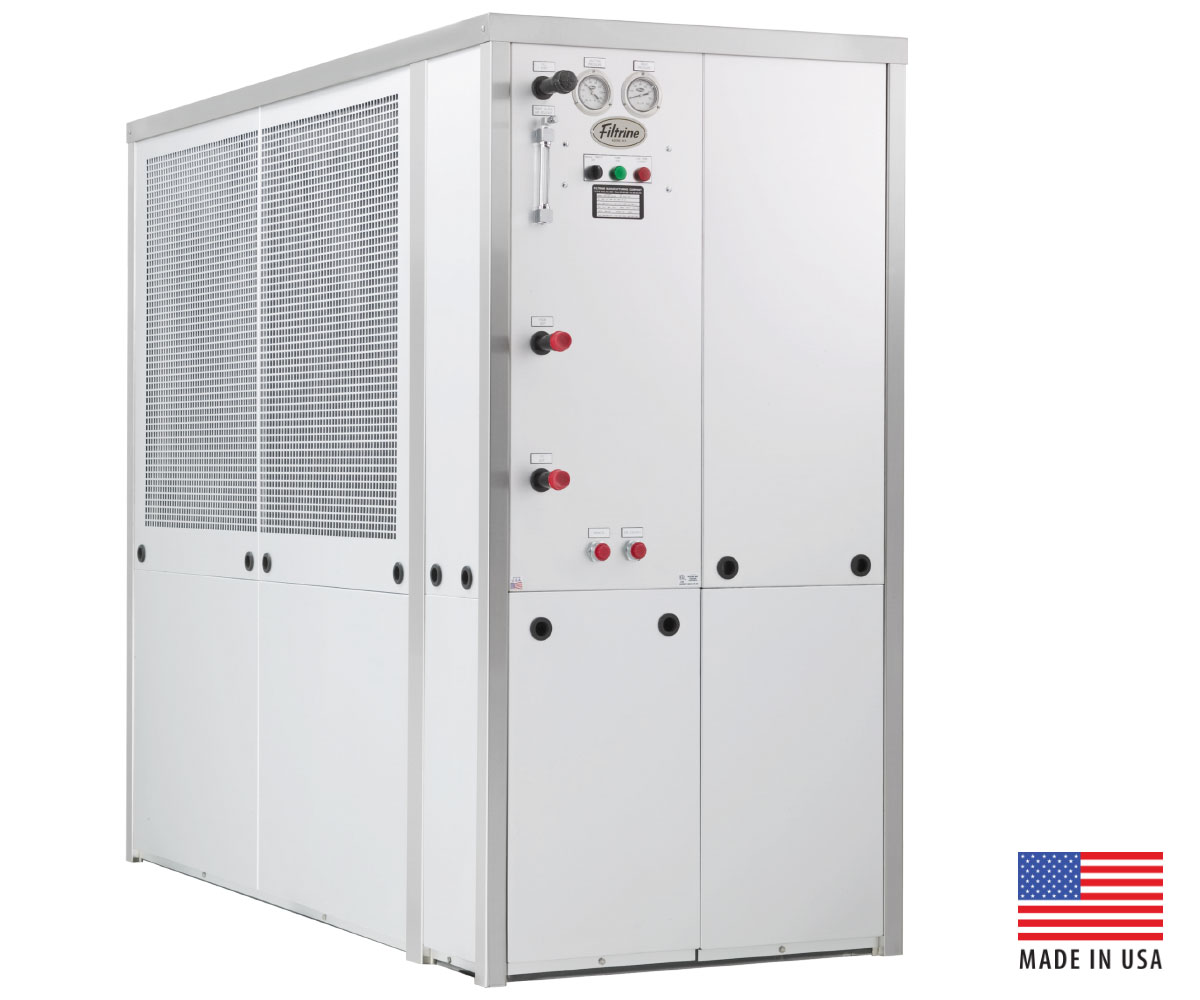
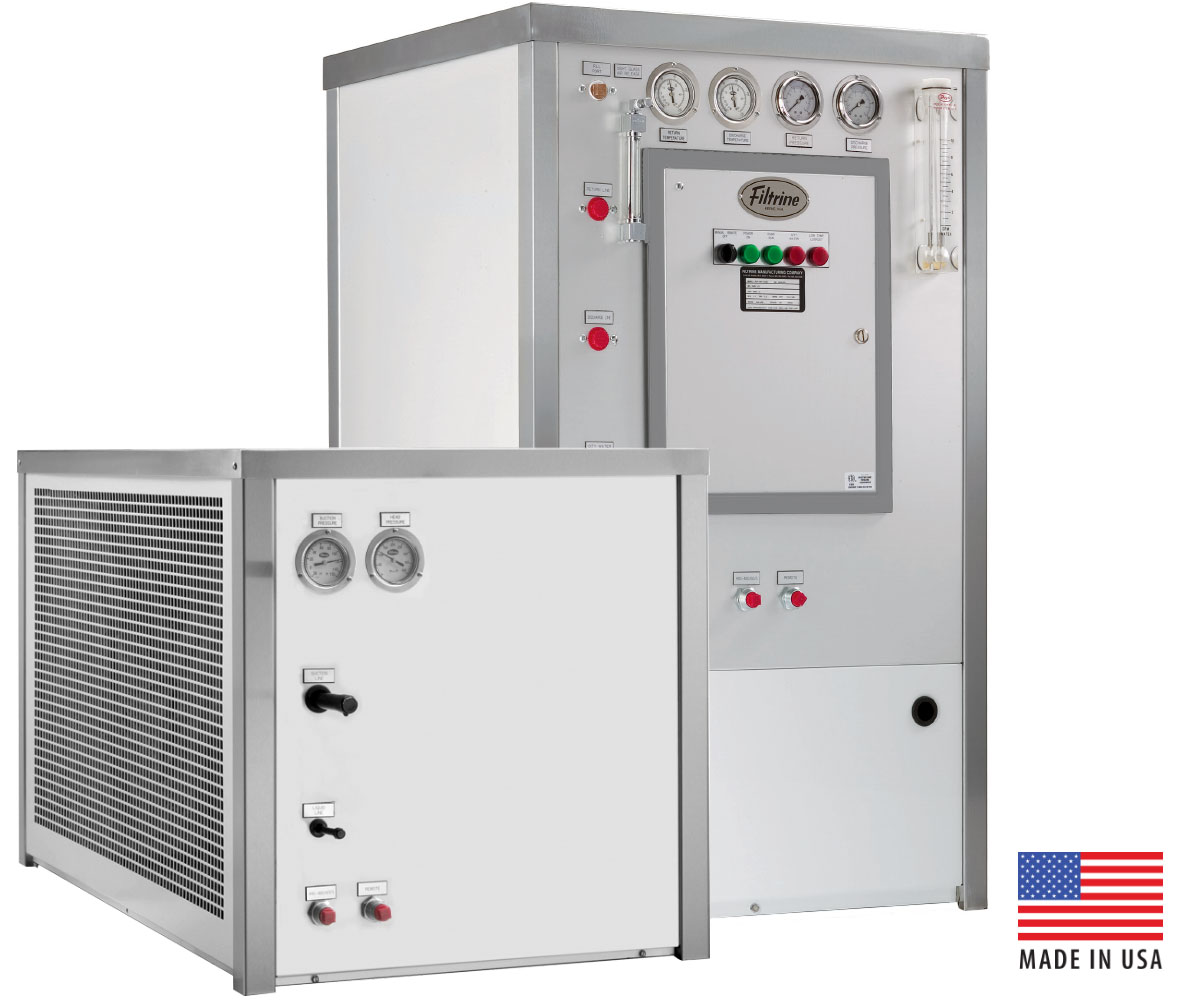
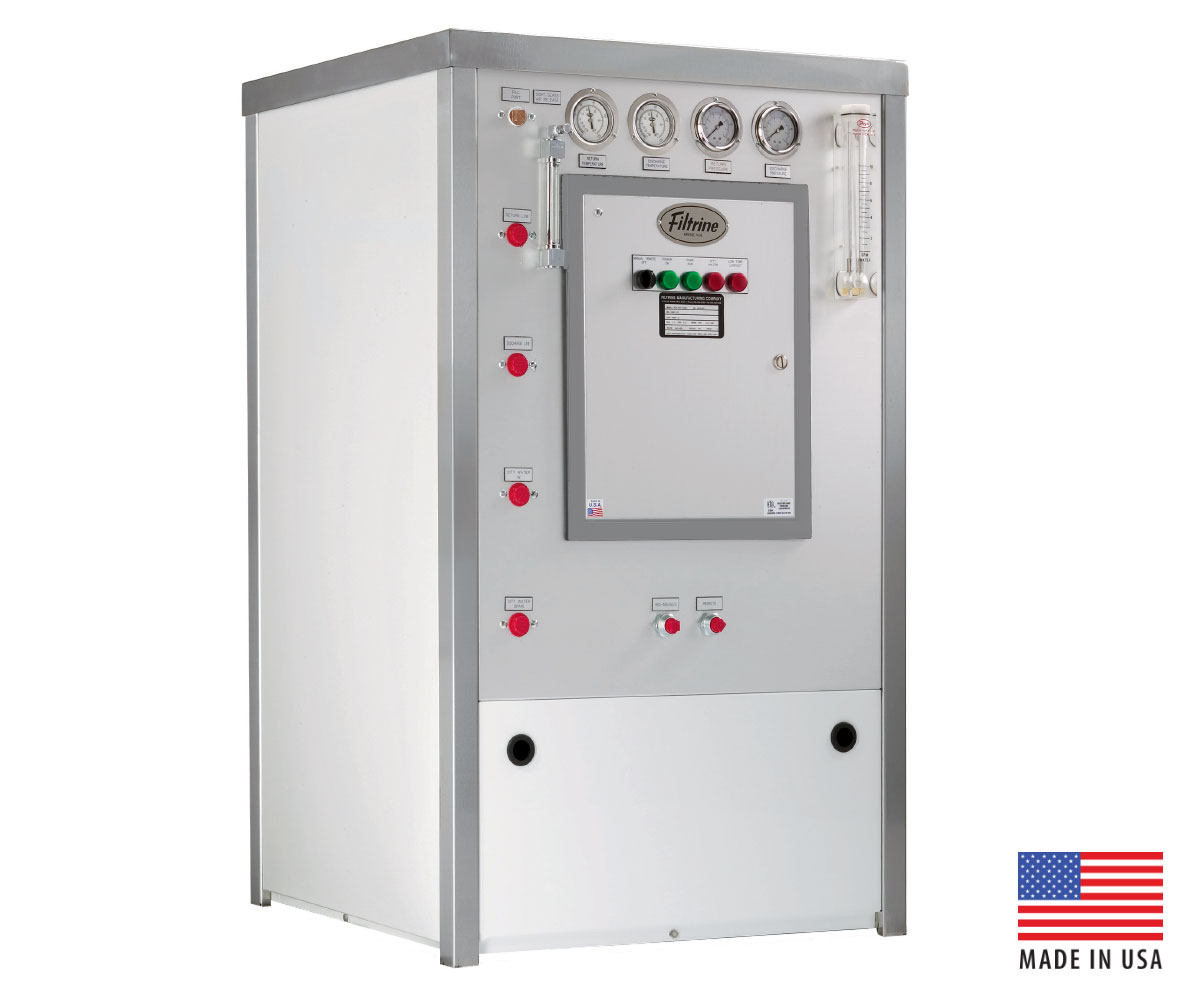
MRI Chiller Systems: How Filtrine Keeps Your MRI Running
MRI systems are some of the most thermally sensitive equipment in a hospital or imaging center. Gradient coils, RF amplifiers, and superconducting magnets all generate heat that has to be removed precisely and consistently, or image quality and equipment uptime both suffer. Filtrine has been engineering custom chiller systems for medical equipment for decades, and MRI cooling is one of our core specialties. Rather than selling a standard chiller off a spec sheet, Filtrine builds each MRI chiller around the exact make and model of the scanner it’s cooling, whether that’s a GE Healthcare, Siemens, Philips Healthcare, or Hitachi Medical Systems unit.
Why Standard Chillers Don’t Work for MRI Machines
Most industrial chiller manufacturers treat medical cooling as a secondary application, offering the same standard tonnage tiers they’d sell to a factory floor or a server room. MRI equipment doesn’t work that way. Each MRI manufacturer, and often each model within that manufacturer’s lineup, has its own coolant flow rate, pressure, and temperature stability requirements dictated by the gradient amplifier and magnet design. A chiller that’s slightly oversized, undersized, or imprecisely controlled can mean inconsistent image quality, nuisance shutdowns, or premature wear on equipment that costs millions of dollars to replace.
Filtrine engineers every MRI chiller to the specific equipment it will serve. That means matching the coolant circuit to the gradient amplifier’s actual demands, sizing the pump for the exact flow and pressure the MRI requires, and building in the redundancy or seismic protection a facility’s location calls for. It’s a fundamentally different approach than pulling a chiller off a shelf and hoping it’s close enough.
The Storage Method of Cooling
One of the features that sets Filtrine MRI chillers apart is the storage method of cooling. Instead of trying to match refrigeration output to the MRI’s load in real time, which can cause temperature swings as the scanner cycles between imaging sequences, Filtrine chillers use an oversized stainless steel tank to store a reservoir of coolant at a stable temperature. As the MRI’s demand shifts from idle to full gradient output and back, the chiller draws from that thermal reserve instead of chasing the load.
The result is a much steadier coolant temperature delivered to the MRI, which translates directly into more consistent imaging and fewer temperature-related faults. It’s a simple concept, but it’s one of the main reasons Filtrine-built chillers are known for high uptime on the equipment they cool.
Built for Every Major MRI Manufacturer
Filtrine builds MRI chillers for all of the major MRI manufacturers, with each system engineered around that manufacturer’s specific gradient amplifier and coolant circuit requirements:
GE Healthcare: Chiller models built for GE Signa and Optima MRI platforms, including seismic-approved configurations for facilities in earthquake-prone regions.
Siemens Healthineers: Chillers engineered for the MAGNETOM line, including Sonata, Symphony, Avanto, Aera, Skyra, and Prisma systems, matched to each model’s gradient amplifier output.
Philips Healthcare: Chiller systems built for the Achieva, Ingenia, and related platforms, available in packaged, split-system, and remote condenser configurations depending on the installation.
Hitachi Medical Systems: Chillers built for Hitachi’s Echelon and related MRI systems, using the same storage-method cooling approach across the line.
Because each of these MRI platforms has different thermal and flow requirements, no single chiller design works across all of them. Filtrine’s manufacturer-specific engineering is what makes that level of fit possible.
Configuration Options
Every facility has different space, ventilation, and water access constraints, so Filtrine offers MRI chillers in multiple configurations rather than a one-size-fits-all format:
- Self-contained air cooled: designed for well-ventilated mechanical rooms and don’t require an external water source. See air cooled chiller options →
- Water cooled: built for nonventilated rooms and connect to a facility’s existing city, tower, or plant water for heat rejection. See water cooled chiller options →
- Remote air cooled (split system): suited to nonventilated indoor spaces, since the condenser is mounted outdoors on a rooftop or exterior wall rather than drawing air from inside the mechanical room. See split system chiller options →
The right configuration depends on the mechanical room, the building’s water access, and the facility’s noise and ventilation constraints, and it’s chosen based on the site rather than defaulting to whatever’s easiest to manufacture.
Reliability, Uptime, and Long-Term Support
MRI downtime is expensive, both in lost scan revenue and in delayed patient care, so uptime is the metric that actually matters to the facilities running this equipment. The storage method of cooling reduces the temperature swings that cause nuisance faults, and the stainless steel construction used throughout Filtrine chillers resists the corrosion that shortens the life of lower-grade components.
Filtrine also manufactures in the United States with domestic parts sourcing, which means service and replacement components remain available for the full life of the system, not just the first few years. Combined with one of the strongest warranties in the industry and a nationwide service network, that long-term support is a significant part of why facilities choose Filtrine for equipment this critical.
Frequently Asked Questions About MRI Chiller Systems
What is an MRI chiller?
An MRI chiller is a specialized cooling system that removes heat generated by an MRI’s gradient coils, RF amplifiers, and other components, maintaining the stable temperature the equipment needs to operate accurately and reliably.
How does an MRI chiller work?
An MRI chiller circulates temperature-controlled coolant to the MRI’s gradient coils and electronics, absorbing the heat they generate and carrying it away to be rejected through an air-cooled or water-cooled condenser. Filtrine’s chillers use the storage method of cooling, drawing from a reserve of stable-temperature coolant so the output stays consistent even as the MRI’s load shifts between imaging sequences.
Why can’t a standard industrial chiller cool an MRI?
MRI equipment requires very precise, stable coolant temperature and flow rates that vary by manufacturer and model. A standard chiller sized for general industrial use typically can’t match those specific requirements closely enough to prevent image quality issues or equipment faults.
What is the storage method of cooling?
It’s Filtrine’s approach of storing a reserve of temperature-stable coolant in an oversized stainless steel tank, so the chiller can respond to the MRI’s changing load without the temperature swings a standard refrigeration cycle would produce.
Which MRI manufacturers does Filtrine build chillers for?
Filtrine builds custom chillers for GE Healthcare, Siemens Healthineers, Philips Healthcare, and Hitachi Medical Systems MRI platforms, among others.
Can an MRI chiller be seismic (OSHPD) approved for California facilities?
Yes. Filtrine offers OSHPD-approved seismic configurations for MRI chillers installed in earthquake-prone regions, including California.
How long do Filtrine MRI chillers typically last?
Filtrine chillers are built with stainless steel components and heavy-duty construction designed for decades of service, and domestic manufacturing means parts and support remain available for the full life of the system.